Sidekick
Empowering Streamers, Driving Growth: The Redesign of sidekick
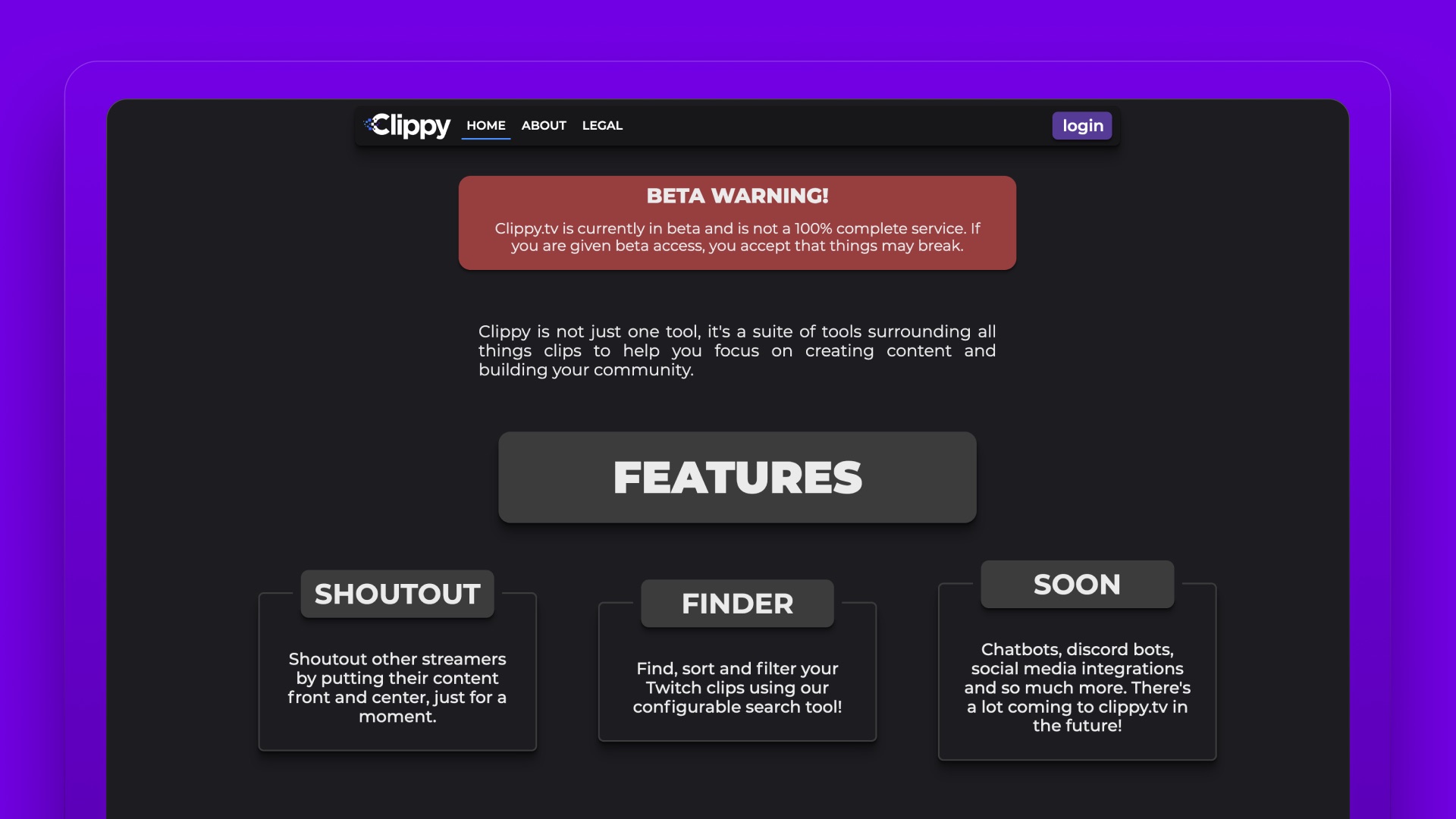
sidekick came to eFuse as an acquisition called Clippy.tv, with a thin feature set and better-funded competitors pulling streamers away. I led the redesign from the landing page through the core product, working directly with streamers in Discord to find the fight we could actually win.
Overview
Inherited tools, losing ground
Acquiring a product means inheriting decisions nobody on your team made. sidekick had real users and real capability, but it was competing against tools with more people and more runway behind them, and streamers were noticing the difference.
That set the terms (Fig 1.0). This was not a project about making an existing product nicer. It was about giving streamers a reason to stay on a platform that was being out-resourced.
The hurdles
Inherited complexity:
The tool suite arrived as an acquisition, carrying someone else’s architecture and someone else’s assumptions. Nothing could improve until we understood which parts were load-bearing.
A thin feature set against better-funded rivals:
Competitors offered streamers more, and streamers noticed. sidekick was losing ground not because the tools were bad but because there were not enough of them to be the tool someone builds a broadcast around.
Too many steps between intent and result:
What did exist asked more of a streamer than it needed to. That cost compounds for someone configuring tools mid-broadcast with an audience watching.
Goal:
Give streamers a reason to stay, not just tools that work.
Deep dive
Ask the streamers, not the roadmap
Inherited products invite assumption. It is easy to look at a feature list and reason backwards about why it exists, and easier still to be wrong about it.
So we went to the source. Dedicated Discord channels put us in continuous contact with the people running these tools live, alongside structured interviews and surveys. Discord mattered more than the formal research did, because it was ongoing. Streamers reported problems the day they hit them, and we could ask follow-up questions while the context was still fresh.
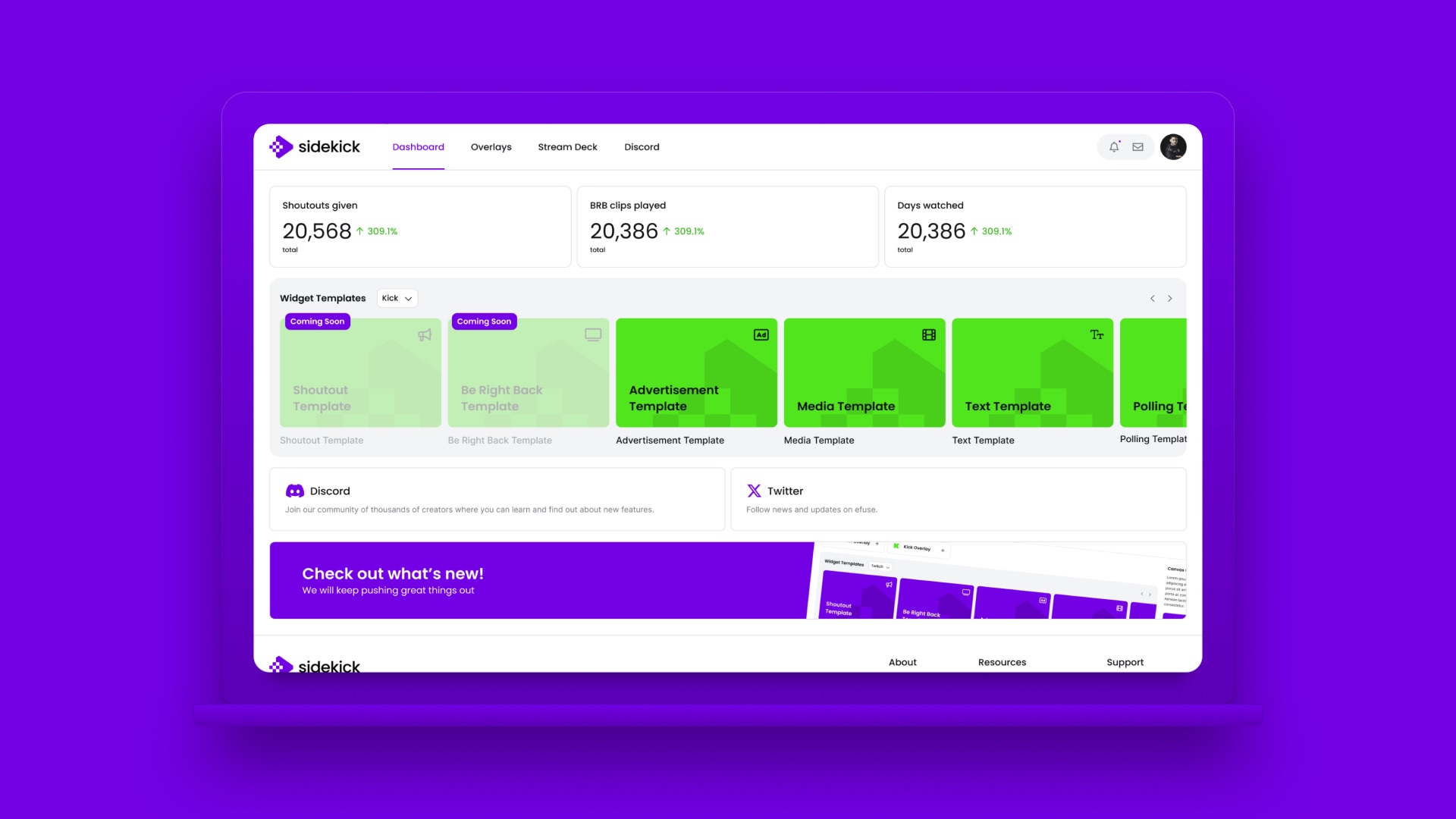
What came back reframed the product (Fig 2.0). Streamers were spending attention on tooling during the one activity where their attention is the entire product. Every configuration step was competing with their audience.
The competitive picture made that unforgiving. Streamers were not evaluating sidekick in isolation, they were comparing it against tools with more behind them, and every session where a widget got in the way was a reason to switch.
The decision
Depth where it counts, not parity everywhere
The obvious response to losing on features is to chase the feature list. That is a race sidekick could not win, since the competitors had more people and more runway, and shipping thin versions of their tools would have meant being worse at everything instead of better at something.
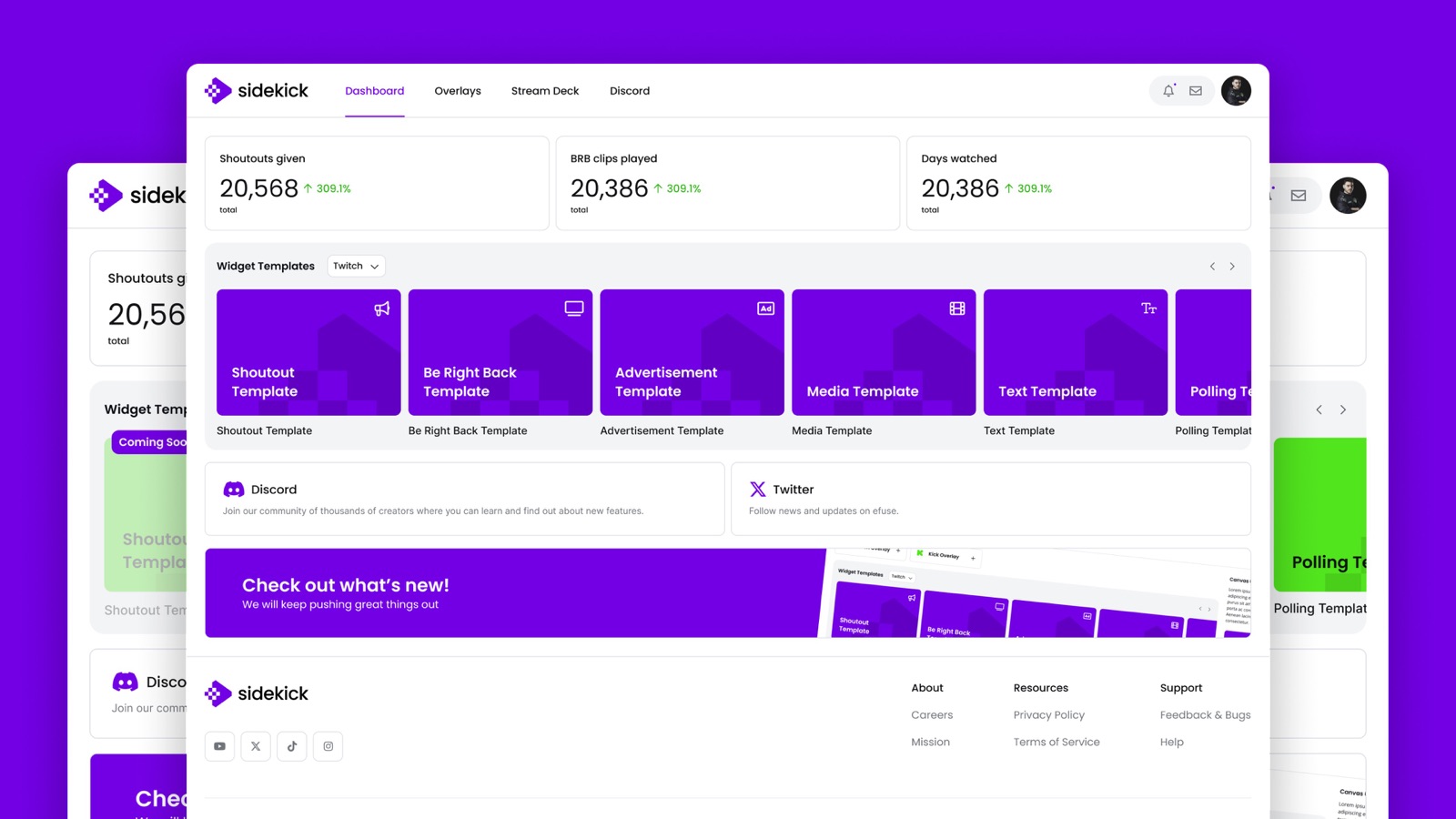
So we picked the fight we could win. The widgets streamers used most got real investment, with steps stripped out until they were usable mid-broadcast without breaking attention. The measure was not what a streamer could do, it was how much of their attention it cost, because that is the axis a well-funded competitor tends to ignore while adding surface area.
The pressure test is specific (Fig 3.0). Someone is live, viewers watching, and needs a shoutout to fire. There is no time to explore an interface. Winning that moment is worth more to a streamer than a longer feature list they will never open.
Discovery
Making the tools findable
Depth in the core widgets solves nothing if a streamer never reaches them. That made information architecture its own workstream rather than a byproduct.
Journey maps established where in a broadcast each tool was actually needed. Card sorting and tree testing then checked our structure against how streamers themselves group these tools, which is not how an engineering team organizes them. Documentation was rebuilt alongside the navigation, since a tool suite is only as usable as its explanation.
Collaboration
The product trio
Me, the Product Owner, and the Engineering Lead, working as a single unit from brief through release.
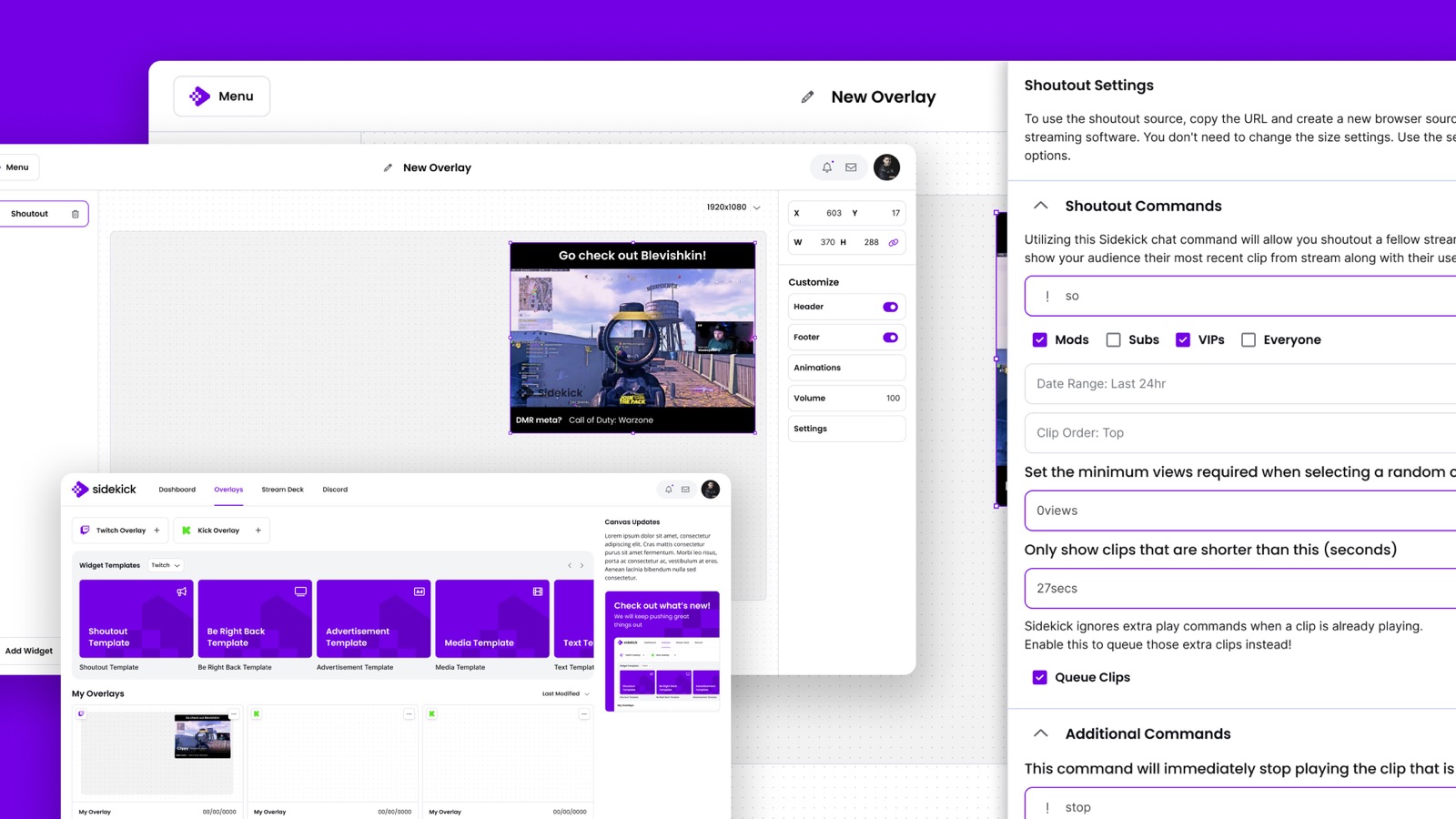
On a product with an inherited codebase, that structure earns its keep. Feasibility questions on legacy architecture got answered in conversation rather than discovered after a design was finished (Fig 4.0), which meant scope stayed honest and nothing got designed that could not ship.
Process
From idea to reality
Hands-on Validation
Qualitative findings became low-fidelity wireframes, iterated through A/B testing and user walkthroughs before anything went high fidelity (Fig 5.0).
Engineering the Gap
Design sprints ran in a loop with the Discord feedback channel rather than closing at handoff. Streamers who reported a problem saw it addressed and told us whether the fix worked, which is a faster cycle than any scheduled research cadence.
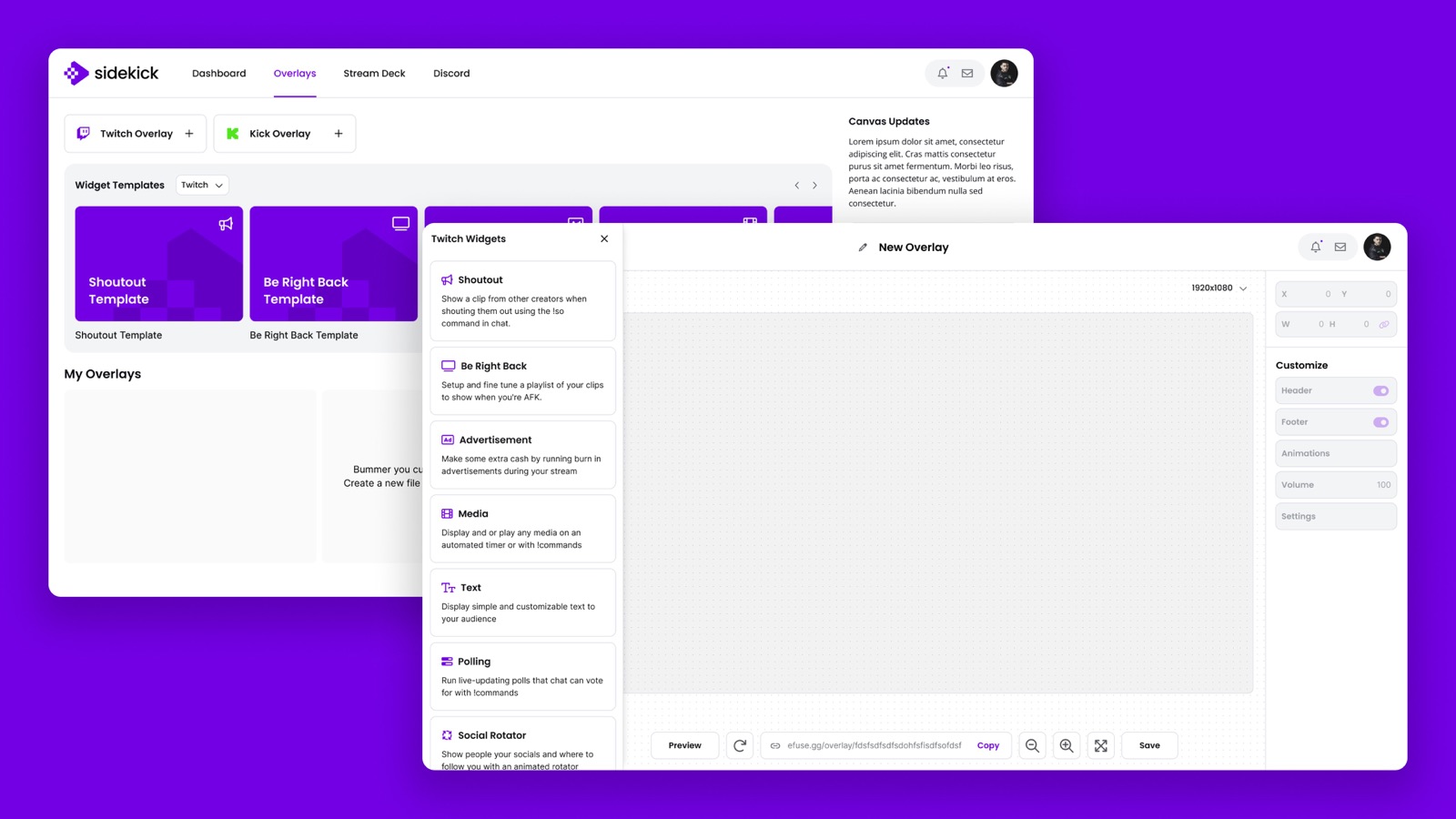
Stress testing paradigms
Wire-framing, prototyping, and validation
The test was whether tools disappeared into the broadcast. A widget doing its job is one a streamer stops thinking about.
Usability sessions and continuous Discord feedback both pointed the same way. Reduced steps made widgets usable mid-stream, and the restructured navigation meant streamers found tools without being told they existed. Adoption came from people who had used the old version and stayed, which on a product losing ground to competitors is the outcome that matters.
Steps to result
Reduced
Widgets streamlined so configuration fits inside a live broadcast.
Findability
Improved
Card sorting and tree testing aligned structure with how streamers group tools.
Feedback loop
Continuous
Discord channels turned research into an ongoing conversation, not a phase.
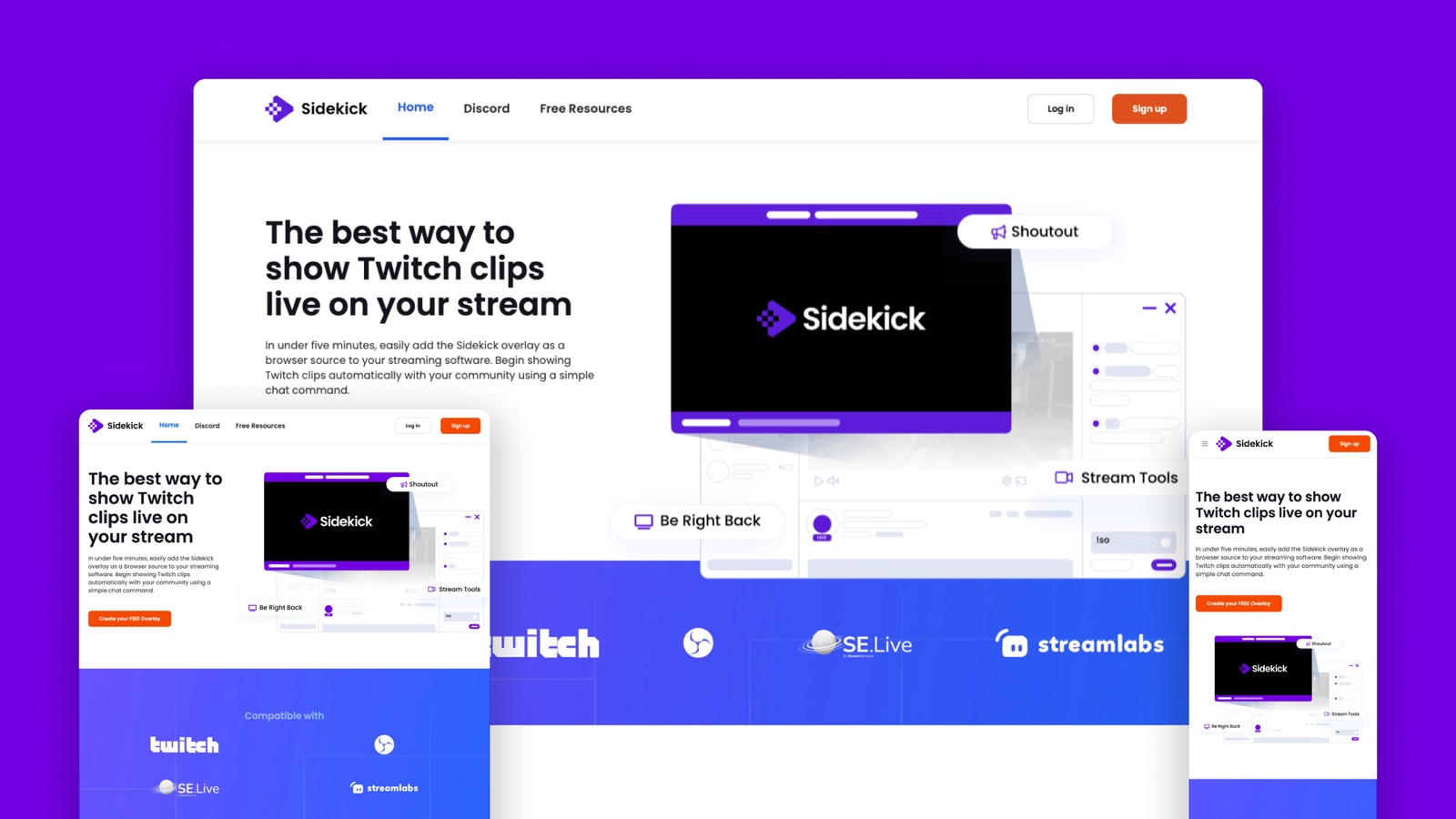
By the numbers
Takeaways and business impact
Sidekick relaunched under eFuse in October 2021. These figures are what the redesigned product accumulated from that point.
1.1m
Clips Played
Across !so and !brb, the most used widgets in the suite.
413
Days of Total Playtime
More than a year of cumulative airtime held by these widgets.
33k
Channel Shoutouts
Streamers pointing audiences at each other, through the product.
8k
Monthly Active Users
A recurring creator base on a tool competing against better-funded rivals.
Usage concentrated where the design work went
The widgets that got the deepest simplification are the ones carrying the volume. 1.1 million clips through !so and !brb is the depth-over-breadth bet proving itself in the only place it counts.
Cumulative playtime is retention in disguise
Widgets only run while a stream is live and viewers are watching. 413 days of airtime measures whether these tools kept audiences in place, which is what streamers are actually buying.
33k shoutouts made the product a network
Streamers using sidekick to promote other streamers means the tool participates in how this community already works. That is a growth loop a competitor cannot copy by shipping features.
Built from a standing relaunch
Every one of these numbers accumulated after October 2021, on an acquired product that arrived with someone else’s architecture and a thinner feature set than its rivals.